
Personale docente
Curriculum
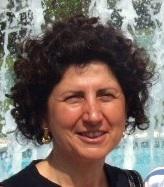
Flaviana Gottardo was born in Dolo (Venice) on April 13th 1965, graduated in Agricultural Science in 1992, obtained the PhD in Animal Science in 1996. The training and education have been mainly addressed to the evaluation both of welfare of farm animals and of quality of food of animal origin. During the Ph.D. in Animal Science she has completed a period of research and study in the United Kingdom at the Department of Clinical Veterinary, University of Cambridge, within the research group “Animal Welfare and Human Animal Interactions Group”, coordinated by Professor Donald Broom. In November 1999 she became a\nresearcher at the Faculty of Veterinary Medicine in the scientific-field “Animal Husbandry”. Since 2006 she has been an associate professor in the same faculty and in the same scientific field. The teaching and research activities have always focused on welfare of farm animals (particularly beef cattle, dairy cows, veal calf and pigs) together with conservation of biodiversity within the livestock sector and development of environmentally friendly rearing techniques. As an expert on these topics she has also an active teaching activity for veterinarian continuing education and for the update of farmers and technicians of the livestock sector. The research activity is documented by over 150 publications in national and international journals, 77 of them belonging to the scopus database (h-index=18; Total citation=859). She is a peer reviewer for important scientific journals of the sector such as Jounal of Animal Science, Animal, Research in Veterinary Science, Livestock Science. She is also a sector editor for the Italian Journal of Animal Science. She has been the coordinator of research units in several projects funded by the University or other institutions such as Istituto Zooprofilattico delle Venezie, Veneto Agricoltura, Farmers Federation of Trento (see Aree di ricerca). She took part in several European projects as a member of the team of the University of Padova (see Aree di Ricerca). She is currently involved in several Italian and European projects: LOWEMEAT, on the development of a low-emission rearing system for cattle, GenTORE Genomic Management Tools to Optimise Resilience and Efficiency across the Bovine Sector, as part of the research team of the University of Padova, and SusCatt Increasing productivity, resource efficiency and product quality to increase the economic competitiveness of forage and grazing based cattle production systems, as work package coordinator. The research topics that have occupied more recently have included: 1. Feeding plans and welfare of veal calves; 2. Development of systems for assessing welfare at the farm level for calves, beef cattle and dairy cows; 3. Animal welfare issue in relation to the practice of dehorning in cattle; Flaviana Gottardo is a member of the Italian Scientific Association of Animal Production (ASPA)\nTeaching activity: it is developed within the scientific-field “Animal Husbandry” during the Master’s Degree in Veterinary Medicine.
Pubblicazioni
Vitello a carne bianca (veal calf):
1. Brscic M et al. (2011). Prevalence of gastrointestinal disorders recorded at postmortem inspection in white veal calves and associated risk factors. J Dairy Sci, 94: 853-863.
2. Prevedello P et al. (2012). Effects of the provision of large amounts of solid feeds to veal calves on growth and slaughter performance and intravitam and postmortem welfare indicators. J Anim Sci, 90: 10, 3538-46.
3. Leruste H et al. (2012). The relationship between clinical signs of respiratory system disorders and lung lesions at slaughter in veal calves. Prev Vet Med, 105: 93-100.
4. Brscic M et al. (2014). Nutrient digestibility of veal calves fed large amounts of different solid feeds during the first 80 days of fattening. Ital J Anim Sci http://hdl.handle.net/11577/3033903 10.4081/ijas.2014.3520
5. Brscic M et al. (2014). Effects of the provision of solid feeds enriched with protein or nonprotein nitrogen on veal calf growth, welfare, and slaughter performance. J Dairy Sci, 97(7):4649-57.
Bovino da carne (beef cattle):
1. Cozzi G et al. (2005). The use of coarse maize silage as a dietary source of roughage for finishing Limousin bulls: effect on growth performance, feeding behaviour and meat quality. Anim Sci, 80: 111-118.
2. Cozzi G & Gottardo F (2005). Feeding behaviour and diet selection of finishing Limousin bulls under intensive rearing system. Appl Anim Behav Sci, 91: 181-192
3. Cozzi G et al. (2009). Growth, slaughter performance and feeding behaviour of young bulls belonging to three native cattle breeds raised in the Alps. Livest Sci, 125: 308-313.
4. Cozzi G et al. (2010). Comparison of two feeding finishing treatments on production and quality of organic beef. Ital J Anim Sci, 9: 4. E77, doi:10.4081/ijas.2010.e77
5. Lora I et al. (2014). Survey on mortality rate of young stock on dairy farms of the Province of Padova. Acta Agraria Kaposváriensis, 18: Supp. 1, 69-74.
6. Brscic M et al. (2015). Assessment of welfare of finishing beef cattle kept on different types of floor after short- or long-term housing. Animal, 9: 1053-1058.
7. Rumor C et al. (2015). Assessment of finishing beef cattle mortality in a sustainable farming perspective. Livest Sci, 178: 313-316.
Bovina da latte (dairy cow):
1. Cozzi G et al. (2011). Short communication: Reference values for blood parameters in Holstein dairy cows: Effects of parity, stage of lactation, and season of production. J Dairy Sci, 94: 3895-3901.
2. Cozzi G et al. (2015). Dehorning of cattle in the EU Member States: A quantitative survey of the current practices. Livest Sci, 179: 4–11.
3. Brscic M et al. (2015). Short communication: Reference limits for blood analytes in Holstein late-pregnant heifers and dry cows: Effects of parity, days relative to calving, and season. J Dairy Sci, 98: 11, 7886-7892.
Suini (pigs):
1. Di Martino G et al. (2013). Continuous straw provision reduces prevalence of oesophago-gastric ulcer in pigs slaughtered at 170 kg (heavy pigs). Research in Veterinary Science, 95: 1271-1273.
2. Lonardi C et al. (2015). Can novel methods be useful for pain assessment of castrated piglets? Animal, 9: 871-877.
3. Scollo A et al. (2016). Frequency of tail lesions and risk factors for tail biting in heavy pig production from weaning to 170 kg live weight. The Veterinary Journal, 207:92-98. doi: 10.1016/j.tvjl.2015.10.056.
4. Gottardo F et al. (2016). Pain alleviation during castration of piglets: a comparative study of different farm options. J Anim Sci